Blogs
New Zealand's real estate sector gets a money laundering risk update
The Department of Internal Affairs (DIA) has released its real estate agent Sector Risk Assessment 2026 (SRA 2026) - the first update to the sector's risk picture since 2019. Here's what it means for real estate agents operating under New Zealand's AML/CFT regime.
What is the SRA and why does it matter?
Under the AML/CFT Act, the DIA is required to assess the money laundering and terrorism financing (ML/TF) risks faced by the sectors it supervises. The SRA 2026 draws on more than seven years of supervisory experience and is designed to help real estate agents ensure their own risk assessments and AML/CFT programs reflect the current environment.
The risk ratings at a glance
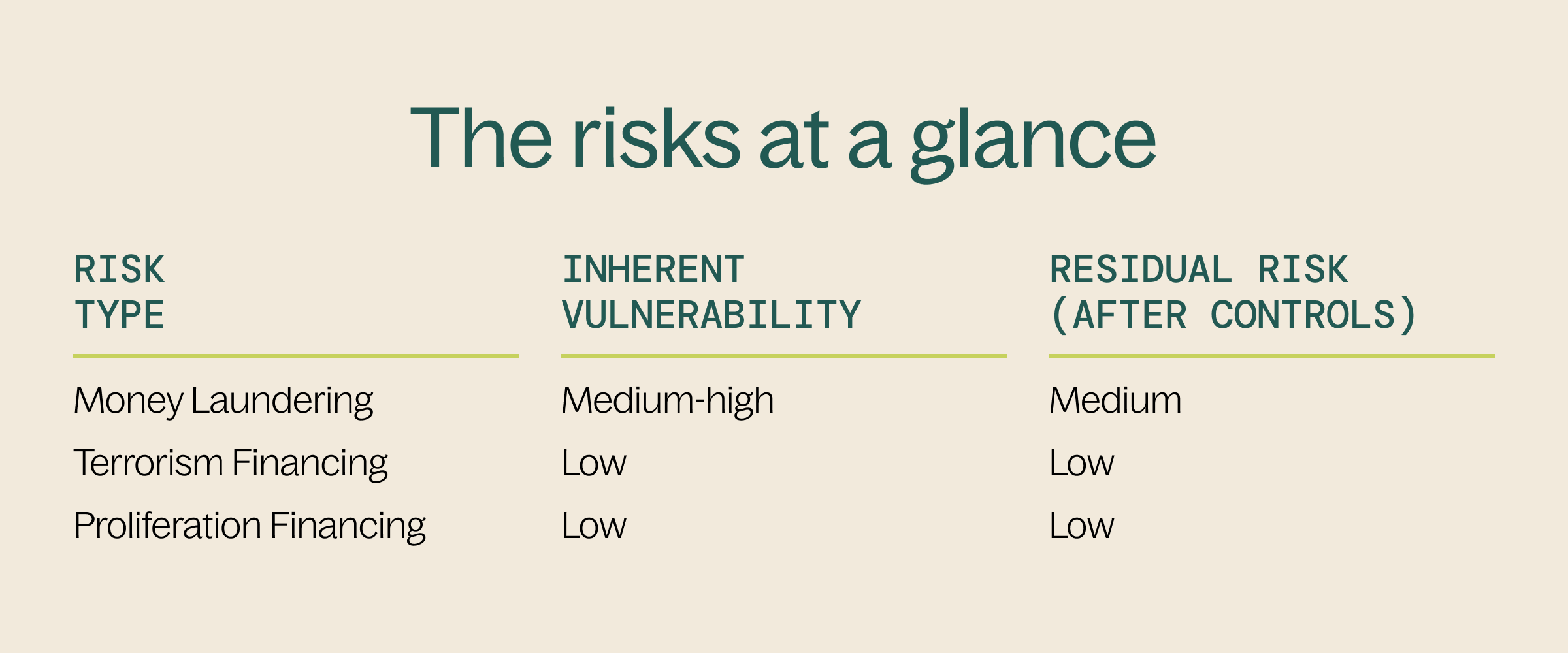
The above table shows the DIA's assessment of money laundering, terrorism financing, and proliferation financing risk for the real estate sector both before and after AML/CFT controls are applied.
Money laundering is the headline concern, with two services identified as most vulnerable.
Sale and purchase of land and/or property (medium-high)
Real estate is a high-value asset well recognised as a vehicle for moving and cleaning criminal proceeds. Large sums can be laundered in a single transaction, and property gives criminals an appreciating asset or a base for further offending.
Trust accounts (medium-high)
When funds move through a trust account, the money laundering risk is at its most direct. The origin of funds is obscured from onwards recipients, and payments from a trust account appear legitimate.
Commercial leasing (low-medium)
Commercial Leasing sits lower because ownership doesn't transfer, though vulnerabilities remain around collusion between landlord and tenant and complex ownership structures.
The threat landscape
New Zealand's three highest-risk money laundering threats are fraud, drug crime, and transnational laundering from overseas, with fraud and drug crime alone generating up to $1.6 billion a year in criminal proceeds.
Real estate agents aren't typically exposed to the initial placement of cash, but they are significantly exposed to the layering and integration stages, where money is moved through the system and converted into assets like property. The sector managed $14.8 billion in client funds and assets in 2024–2025.
Terrorism financing and proliferation financing are both assessed as low risk; there are no specific threats identified for real estate agents in either area.
How controls are holding up
The DIA rates the sector's controls as moderate, bringing residual money laundering risk down from medium-high to medium. Most agents have a nominated compliance officer, written risk assessment, and AML/CFT program in place. Many larger agents and franchise groups have strong centralised compliance frameworks.
But three meaningful gaps remain:
No mandatory registration
Registration with the DIA isn't triggered by simply setting up an agency or gaining a real estate licence, it kicks in once an agency becomes a reporting entity under the AML/CFT Act. Until that point, some agents may not be under active supervision.
Gaps in monitoring and enhanced CDD
A common deficiency is failing to monitor high-risk clients and transactions, document findings in writing, and conduct enhanced CDD when the risk level requires it. These obligations are what make suspicious activity identifiable and reportable.
CDD only covers the vendor, not the buyer
Agents generally only have formal CDD obligations for the vendor. The purchaser is a structural blind spot, particularly around the deposit, which often moves through a trust account before a lawyer is involved.
Key red flags to note
Keep an eye out for some of these signs with clients: they can indicate higher risk, and may mean a transaction needs closer scrutiny, enhanced due diligence, or escalation.
- Property transferred between parties in an unusually short timeframe
- Deposits paid by unknown third parties
- Properties bought or sold with no mortgage and no explanation
- Client's wealth or behaviour doesn't match their apparent profile
- Use of nominees or complex structures to hold or buy property
- Overpayment into a trust account, followed by a request to pay a third party
- Client is evasive, nervous, or reluctant to provide identification
- The vendor and purchaser are known to each other or connected in some way without explanation
- Client asks for unusual speed in completing a transaction
What agents should do now
The DIA expects agents to use the SRA 2026 when reviewing or updating their risk assessment and program. That means checking your risk assessment reflects the current threat environment, ensuring procedures exist for monitoring and documenting high-risk situations, and remembering that suspicious activity reporting applies to both vendors and buyers.
If you're not yet enrolled with the DIA or registered on goAML, now is the time to do it.
The full sector risk assessment is available here.