Blogs
Real-world AML scenarios: How to manage risky clients in estate agencies
When you engage with a client and something feels off, you need to know what to actually do - not just that 'suspicious activity should be reported'.
Scenario 1: The cash-happy buyer
What's happening
A buyer makes an offer on a £1 million residential property. When you ask how they're funding the purchase, they mention they'll be paying a significant portion in cash - possibly via a friend or family member who 'isn't on the title'. They're not particularly interested in inspecting the property and push for a quick settlement.
Why this matters
Cash-heavy transactions that don't come from the named buyer are a classic red flag. The lack of interest in the property and the urgency to settle without explanation are also warning signs. Together, these factors point to potential money laundering - using the property transaction to move illicit funds into 'clean' estates.
What you should do
- Verify the identity of the buyer and the third-party contributing funds
- Ask for evidence of the source of funds - bank statements, payroll records, or other documentation
- Apply enhanced due diligence (EDD) given the risk indicators
- If your inquiries don't give you comfort, or the client becomes evasive, consider whether you need to file a Suspicious Activity Report (SAR) with the UK Financial Intelligence Unit (UKFIU)
- Do not proceed with the transaction if you can't satisfy yourself about the legitimacy of the funds
Remember: you cannot tell the client that you've filed or are considering filing an SAR. The 'tipping off' prohibition is real - breaching it is a serious offence.
Scenario 2: The complex ownership structure
What's happening
A buyer wants to purchase a commercial property through a company. When you dig into the ownership of the company, you find there are multiple layers - a company owned by a trust, which is managed by another company registered in a foreign jurisdiction. The ultimate beneficial owner is difficult to pin down.
Why this matters
Complex, opaque structures are a well-known mechanism for concealing the true owner of property. This doesn't automatically mean something illegal is occurring - there are legitimate reasons for complex structures - but it does mean you need to look harder.
What you should do
- Map out the ownership structure and identify who ultimately owns or controls the entity
- Verify the identity of the beneficial owner(s) - not just the company sitting on the title
- Ask why the structure exists - legitimate buyers should be able to explain it
- Obtain documentation supporting the structure (trust deeds, company registers, etc.)
- If the structure appears designed to conceal ownership with no credible explanation, escalate internally and consider an SAR
Scenario 3: The overseas buyer with unexplained wealth
What's happening
A buyer based overseas approaches your agency to purchase a high-value residential property. They are purchasing in their personal name, but they have no obvious professional background or business history that would explain how they've accumulated the funds. They're paying entirely with a wire transfer from an account held in a country on FATF's high-risk list.
Why this matters
Overseas buyers from high-risk jurisdictions, with funds from offshore accounts and no clear source of wealth, represent elevated risk. FATF maintains lists of countries with strategic AML/CTF deficiencies - transactions involving those jurisdictions warrant more scrutiny, not less.
What you should do
- Apply enhanced due diligence as a minimum
- Request documentation on the source of funds and source of wealth
- Research publicly available information about the buyer
- Seek senior sign-off within your agency before proceeding
- Consider whether the transaction can proceed at all - you are not obligated to take on every client
You can decline to act for a client. A polite 'this transaction falls outside our current capacity' is a legitimate response. You don't owe every prospective client a deal.

Scenario 4: The vendor who wants to avoid paperwork
What's happening
You're acting for a vendor selling a property. During the process, the vendor asks if you can avoid collecting the buyer's identity documents because the buyer is 'a friend of a friend' and they find the whole ID check process annoying.
Why this matters
Your AML/CTF obligations don't change based on the vendor's preferences. You must verify the identity of your customer, and you cannot cut corners because someone finds it inconvenient.
What you should do
- Explain calmly but clearly that identity verification is a legal requirement - not a personal choice
- Proceed with your standard CDD process
- If the vendor becomes aggressive or threatening in their attempt to circumvent your obligations, document the interaction and escalate internally
- Consider whether the transaction or client relationship remains viable
Scenario 5: The tenant with unusual payment patterns
What's happening
You manage a rental property. The tenant has been consistently paying rent in cash, often in advance, and in amounts that seem to fluctuate. They're also subletting the property to multiple short-term occupants without your knowledge.
Why this matters
Property management can also carry AML risks. Unusual cash payments, advance payments without explanation, and subletting that could facilitate trafficking or other criminal activity are all matters worth investigating.
What you should do
- Review your obligations under your AML/CTF program in relation to property management services
- Ask for clarity on the payment method and document the responses
- Conduct a site inspection if the subletting situation warrants it
- If you identify indicators of criminal activity, consider reporting obligations under other applicable laws
- File an SAR if you suspect the payments are connected to money laundering or other financial crime
When to file an SAR
The trigger for filing a Suspicious Activity Report is not conviction - it is suspicion. you must submit a disclosure to the UK Financial Intelligence Unit (UKFIU) via the National Crime Agency SAR Portal if you suspect on reasonable grounds that a person is not who they claim to be, the transaction is connected to the proceeds of crime, a transaction involves financing terrorism, or filing a report may be relevant to an investigation of a serious offence.
File through the SAR portal online. Once filed, do not tell the subject of the report. Keep the fact and content of the report confidential.
Make sure your team is ready
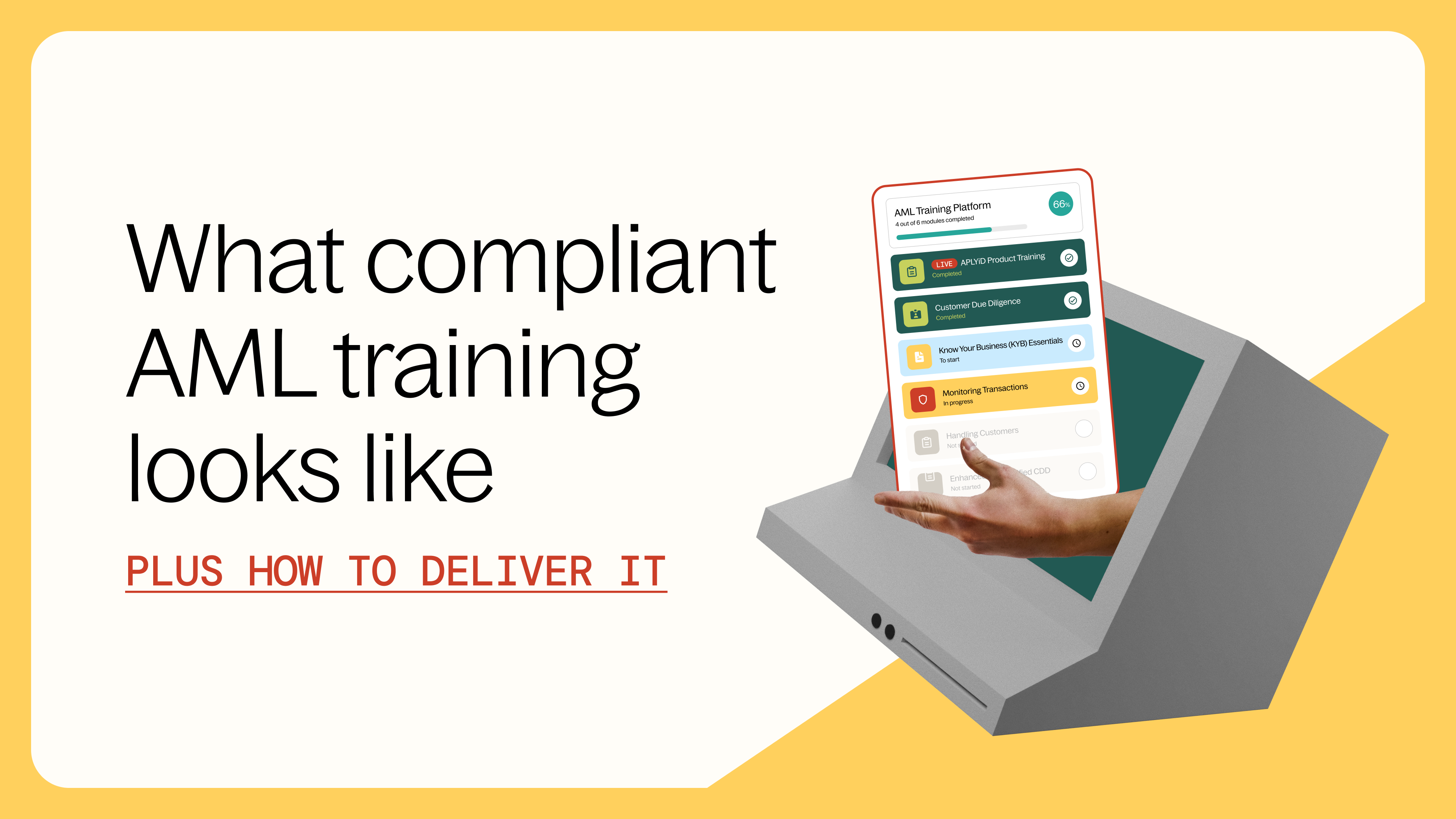
Knowing what to do in these situations doesn't happen by accident. It happens when your team has been properly trained - and that training is kept up to date.
APLYiD’s platform is built to support you at every stage of the process. From tailored risk assessments and CDD checks that catch red flags at onboarding, to ongoing monitoring - we give you the tools to identify and respond to risk at every point in the process."