Blogs
What compliant AML training looks like
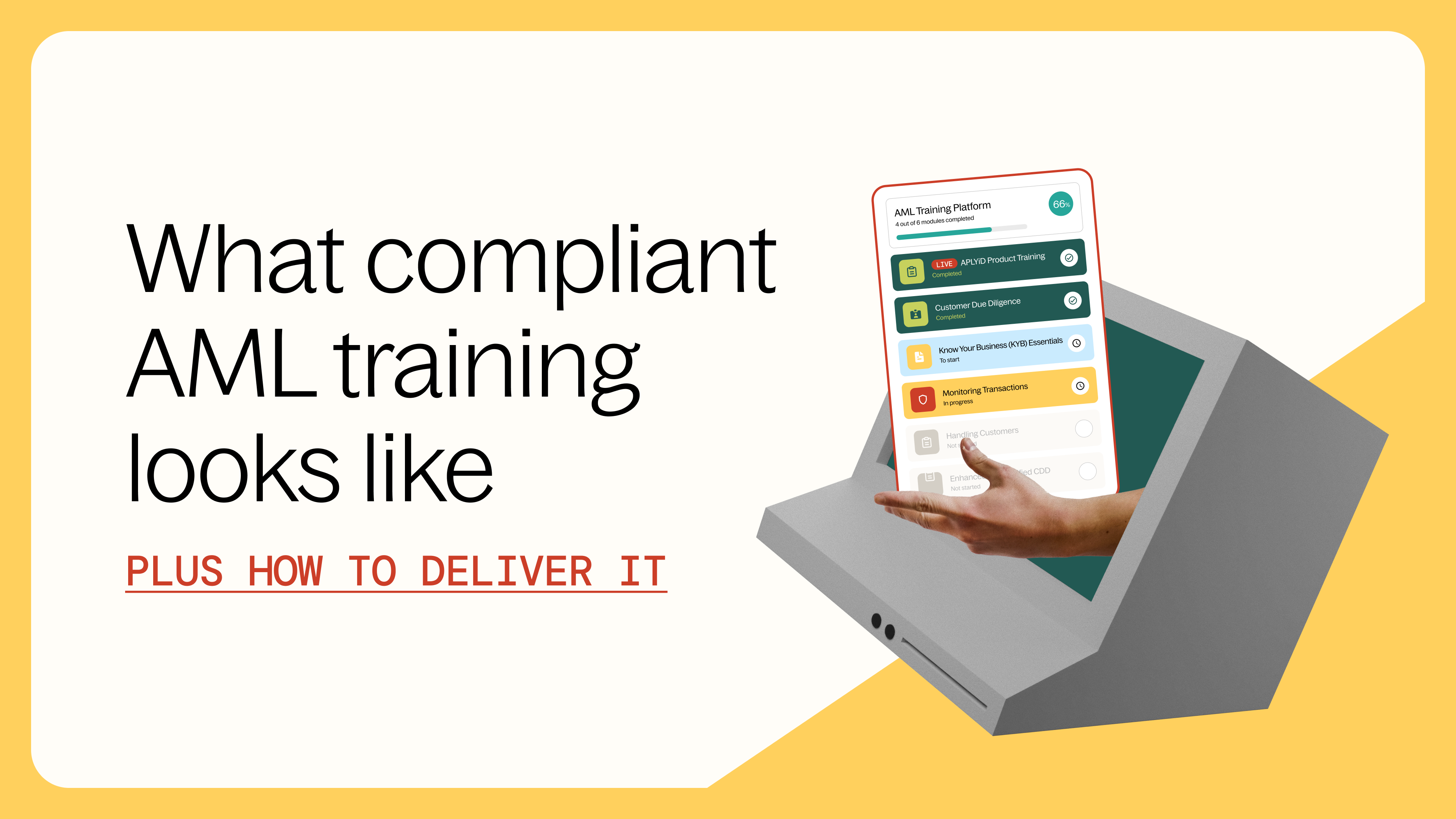
Tranche 2 reforms have brought a wave of new reporting entities under Australia's AML/CTF regime, and one obligation is catching many businesses off guard: staff training. It's not enough to have a written policy sitting in a drawer. AUSTRAC expects your people to understand it and to be able to prove they do.
Here's what good AML/CTF training actually looks like, according to AUSTRAC's own guidance, and how APLYiD helps you deliver it.
Training isn't a one-off tick
AUSTRAC is clear: training must happen when a new staff member joins, and it must continue throughout their time with you. The reason is straightforward - money laundering and terrorism financing risks evolve, laws change, and your program should reflect that. A staff member trained two years ago on outdated content isn't meeting your obligations today.
AUSTRAC expects you to revisit training when laws or your internal policies change, when an independent evaluation flags gaps, when a compliance breach occurs, or when new AUSTRAC guidance is issued. For compliance officers and senior managers, that could mean training every six to twelve months. For customer-facing staff, annually as a minimum.
It has to be tailored, not generic
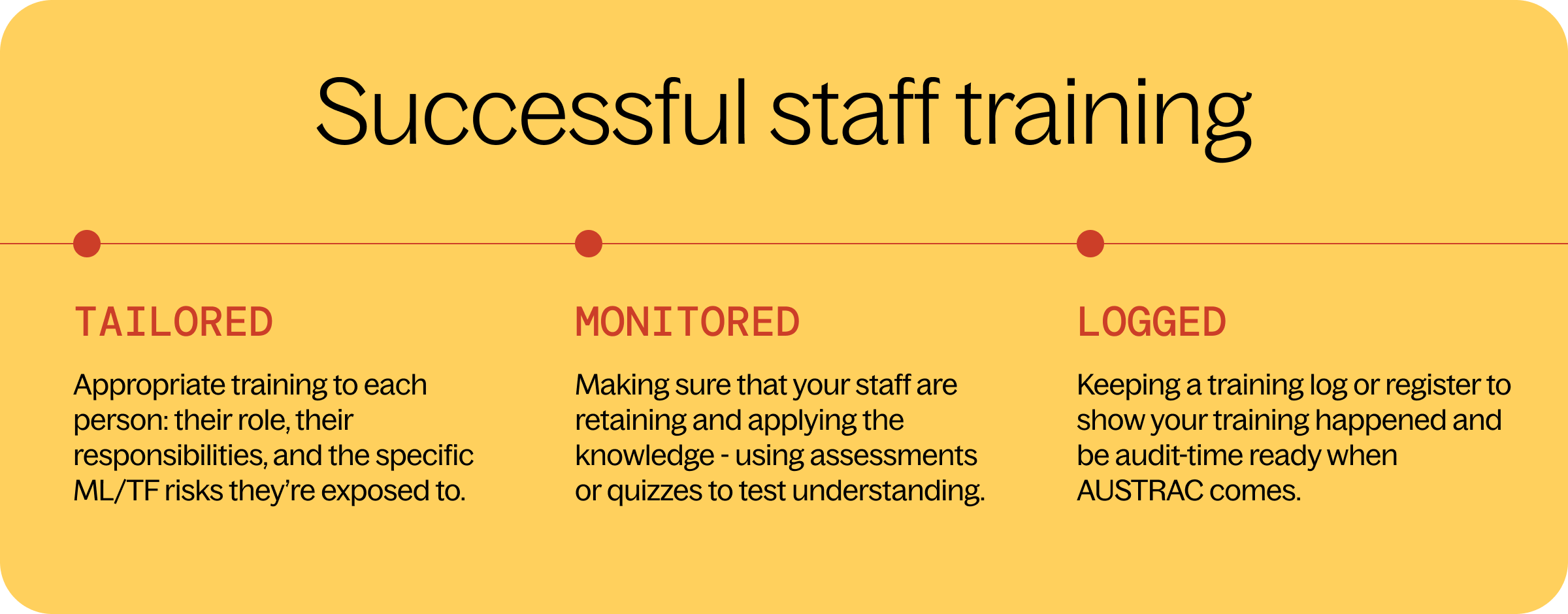
AUSTRAC requires training to be appropriate to the person: their role, their responsibilities, and the specific ML/TF risks they're exposed to. A receptionist and a compliance officer may need very different things.
As a guide: anyone in a customer-facing role needs to understand what suspicious activity looks like and how to escalate it. Those handling onboarding need to know your ID verification and beneficial ownership procedures. Staff conducting enhanced customer due diligence need a deeper understanding of risk indicators and source of funds checks. Compliance officers and senior managers need a thorough grasp of your program, governance obligations, and the regulatory framework around them.
Generic, off-the-shelf training that isn't adapted to your business and industry won't cut it on its own. AUSTRAC allows you to use external providers or platforms, but you remain responsible for making sure the content is relevant and tailored to your people.
You need to monitor whether it's working
Having a training program is one thing. Knowing whether your staff are actually retaining and applying that knowledge is another, and AUSTRAC expects you to do both.
That means tracking who has completed training and when, using assessments or quizzes to test understanding, monitoring for real-world gaps like missed red flags or late suspicious matter reports, and acting on what you find. If someone isn't meeting expectations, you're expected to follow up with targeted or remedial training and document what you did.
Record keeping is non-negotiable
When AUSTRAC comes knocking, you need to be able to show your training happened. That means keeping records of who was trained, what they covered, when they did it, how their understanding was assessed, and any follow-up that was needed.
A training log or register is the practical way to manage this. Without one, demonstrating compliance becomes very difficult.
How APLYiD delivers this
APLYiD's training platform is built around exactly what AUSTRAC expects. For monthly and annual plans, your whole team gets unlimited access to AML/CTF courses, quizzes, and certifications through a comprehensive platform. You’ll cover everything from the AML fundamentals through to the trickier client scenarios that come up in practice.
Completions, results, and certifications are all recorded automatically, so you've always got an audit-ready record of who was trained, what they covered, and when. No chasing spreadsheets, no gaps in your log.
Because AUSTRAC also requires documented AML/CTF program materials - your Part A and Part B programs, transaction monitoring program, and employee due diligence program - APLYiD's policy builder generates all four from a single form, using AUSTRAC-approved templates reviewed by compliance experts.
Put it together and APLYiD covers the full picture: client onboarding, identity verification and re-verification, risk management, ongoing monitoring, policy documents, and staff training - all in one place. It's everything a reporting entity needs to meet their obligations and demonstrate it when asked.